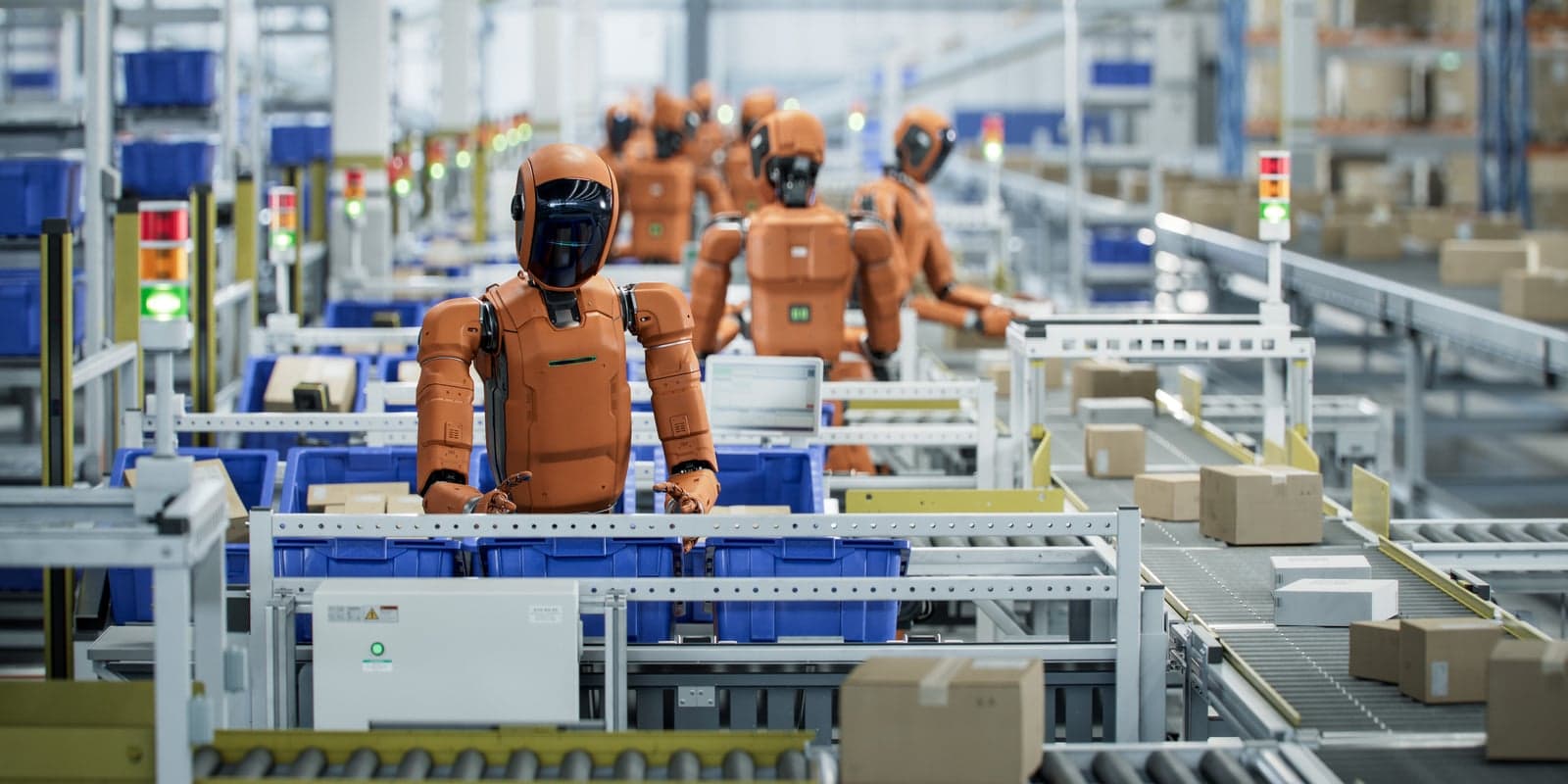
Key TakeawaysHumanoid robots learn their movements from demonstration data, so preparing training data is the heart of any deployment.
There are five ways to gather that data. Of the four available before deployment, the higher the quality, the greater the effort required to collect it.
Industrial engineering's work analysis is the right tool for designing data collection, and Nexgen Japan expects humanoids to become practical on logistics sites by 2030.
Table of Contents
- Humanoids and the logistics floor
- Five ways to gather training data
- How humanoids are trained
- Nexgen View: designing training data is a job for industrial engineering
1. Humanoids and the logistics floor
Humanoid robots will spread first through car factories, with logistics close behind. In its February 2026 report, "Humanoid Robots 2026-2036", the British research firm IDTechEx forecasts that automotive manufacturing will be the first market to adopt them at scale, followed by logistics and warehousing (Figure 1).
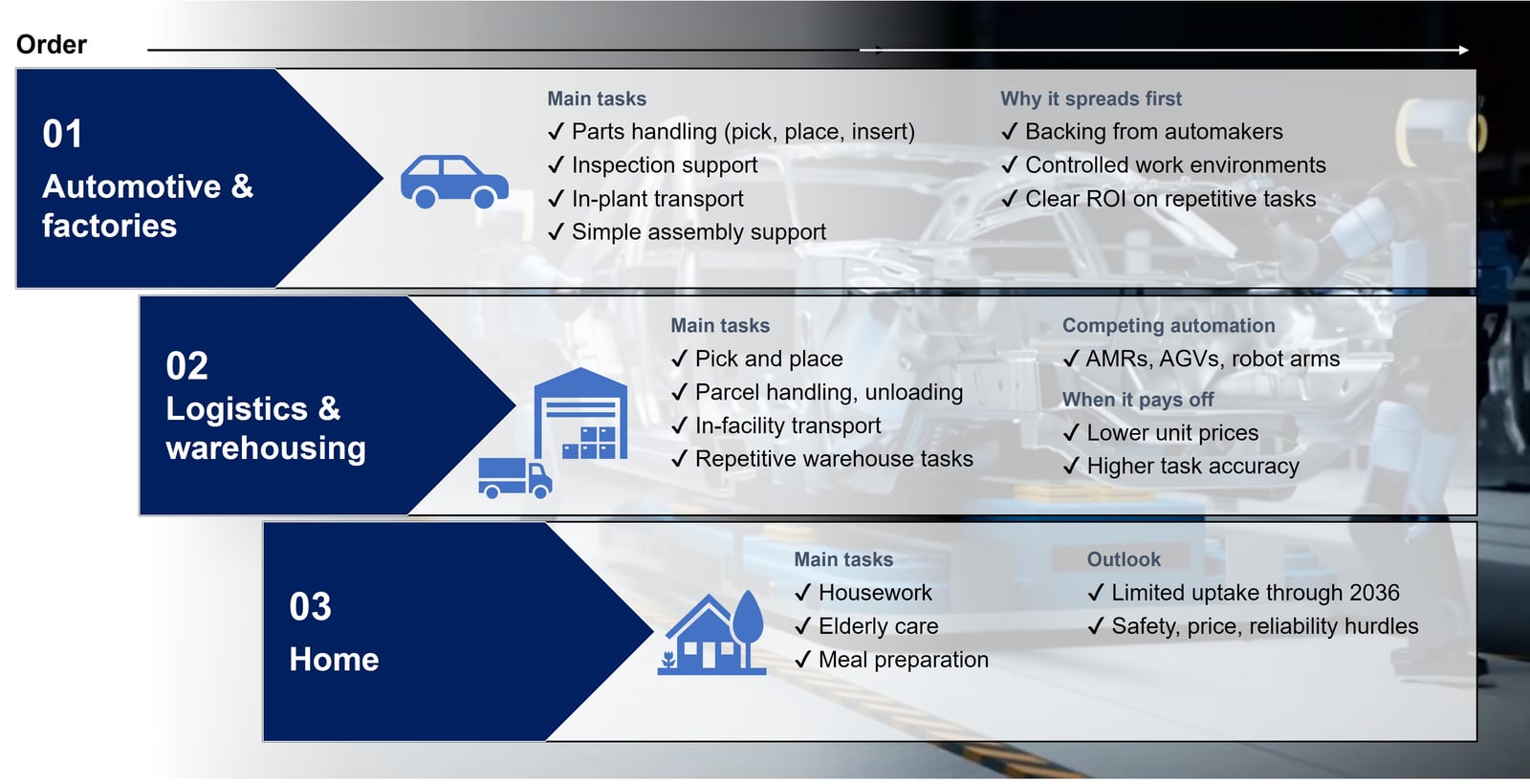
Figure 1. The order in which humanoid adoption spreads (compiled by Nexgen Japan from the IDTechEx report)
Logistics already has autonomous mobile robots (AMRs), automated guided vehicles (AGVs) and robotic arms. For moving goods along fixed routes or routine picking, that existing kit wins on cost. Humanoids are still in contention because warehouses are built around the human body, and one person often handles several tasks. In June 2024 the American firm GXO Logistics signed a multi-year agreement to deploy bipedal robots from Agility Robotics, which now load totes onto conveyors at an apparel warehouse.
What sets humanoids apart from earlier logistics robots is how they learn.
AGVs and robotic arms are programmed movement by movement by engineers. A humanoid watches demonstration data and its AI works out the movements for itself. Physical AI is technology that lets an AI perceive its surroundings through cameras and sensors, make judgements, and move a machine to perform real-world tasks. Its brain is the vision-language-action (VLA) model, which turns images and spoken or written instructions into motion.
2. Five ways to gather training data
Think of how a new recruit is taught. You guide their hands, let them watch an experienced colleague, give them a practice tool, drill them on simulated scenarios, and correct them once they are on the job. The five ways of gathering training data for humanoids map onto these. Take, as an example, the task of lifting cardboard boxes off a shelf and loading them onto a roll cage (Figure 2).
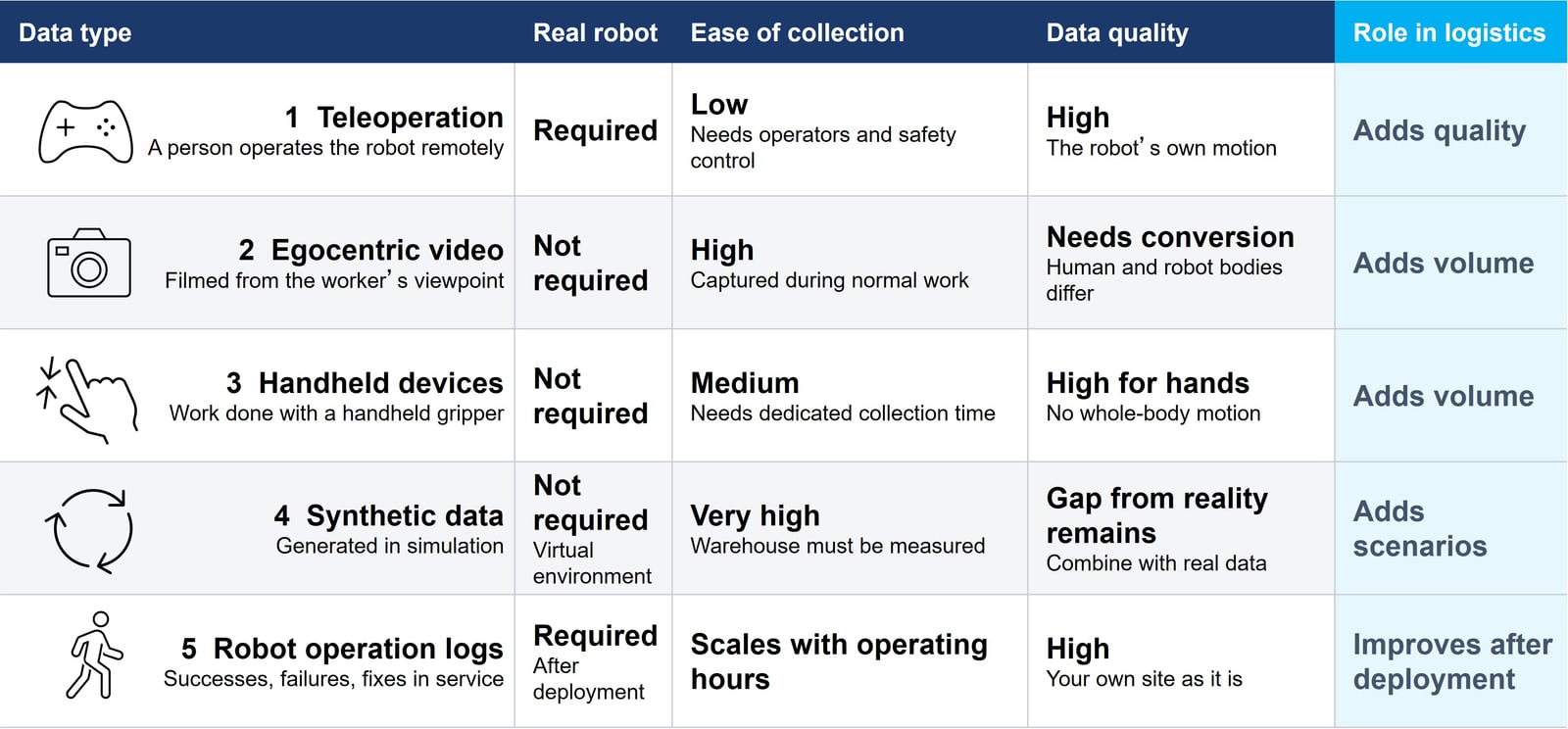
Figure 2. Comparing the five ways of gathering training data (Nexgen Japan analysis)
Five ways to gather training data
Teleoperation
This is the equivalent of guiding the recruit's hands. In teleoperation, a person controls the robot remotely through a VR headset or control rig, and the movements are recorded as demonstrations. Because the robot lifts the box with its own body, everything down to joint angles and applied force can be used directly for training. The quality is the highest of any method. But it requires a physical robot, trained operators and safety management, and collecting data at scale is expensive.
Egocentric video
This is the equivalent of watching an experienced colleague. Egocentric video is footage of work shot from the worker's own point of view, using a camera worn on the head or chest. It needs no robot, can be gathered during normal work, and is cheap to collect in volume. Its weakness is that human and robot bodies differ. The motion of a human arm has to be converted into the motion of a robot's joints.
Handheld data-collection devices
This is the equivalent of handing the recruit a practice tool. A camera is fitted to a gripper shaped like the robot's hand, and a person holds it to do the work. The best-known example is UMI (Universal Manipulation Interface), published in 2024 by researchers from Stanford University and elsewhere. It records hand movements close to a robot's without needing the robot itself. It suits grasping and placing, but cannot capture whole-body movements such as crouching to retrieve a box from the bottom shelf.
Synthetic data
This is the equivalent of drilling on simulated scenarios. Synthetic data is generated by moving a robot through a virtual space on a computer. From a handful of demonstrations, it can produce vast numbers of scenes with varied box sizes, positions and lighting. NVIDIA reports that it generated 780,000 motion trajectories in 11 hours and, by mixing them with real data, improved performance by 40% over training on real data alone. Because a gap with reality remains, synthetic data is used alongside real data.
Records from robots in operation
This is the equivalent of correcting the recruit on the job. These are the deployed robot's own work logs: successful movements, failures and moments when a person stepped in to correct it all become material for the next round of training. They are available only after deployment.
Of the four methods available before deployment, the higher the quality of the data, the more effort it takes to collect (Figure 3). Our view is that on logistics sites the realistic combination is to secure volume through egocentric video and handheld devices, which can be gathered without halting operations, and to top up quality with teleoperation.
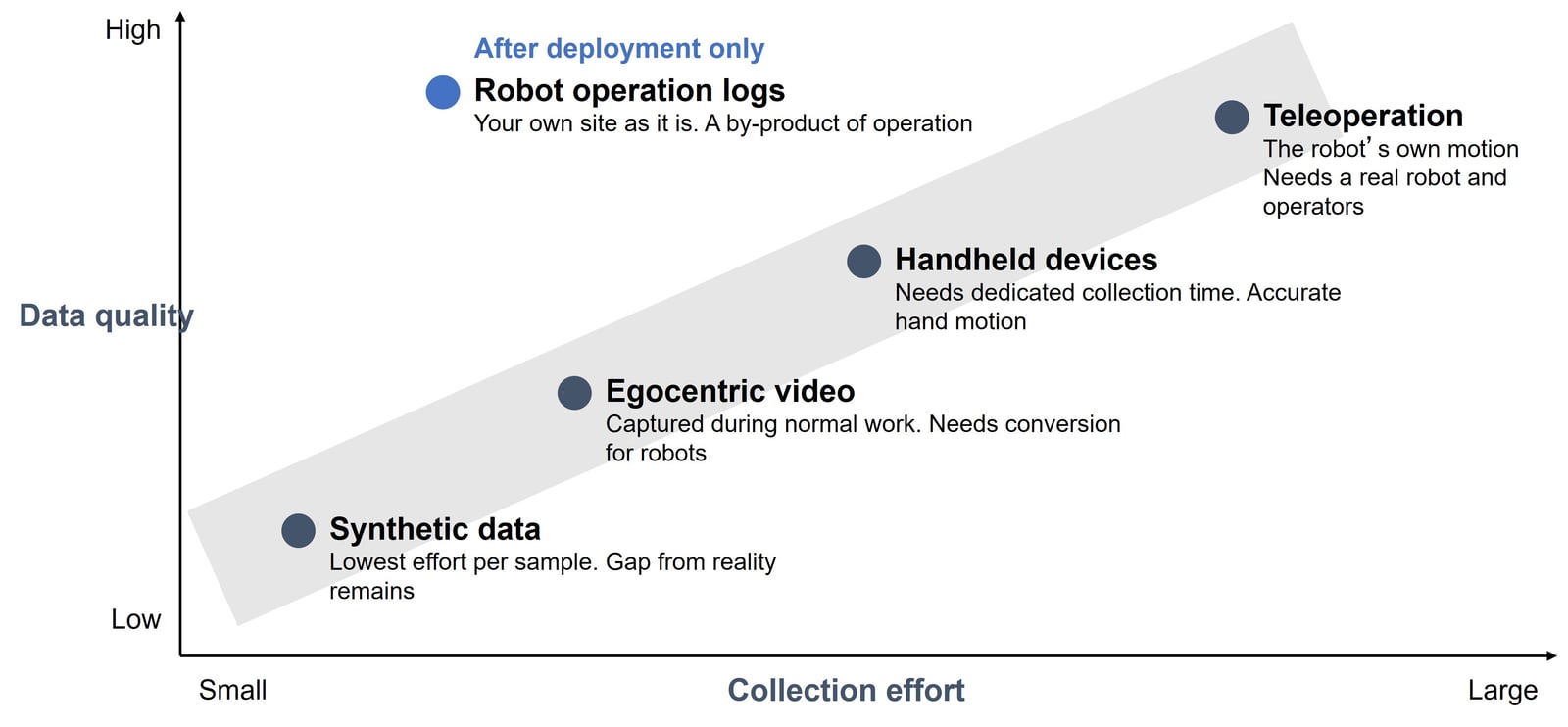
Figure 3. Data quality against collection effort (Nexgen Japan analysis)
3. How humanoids are trained
Pre-training and post-training
In human terms, pre-training is the grounding acquired at school, and post-training is on-the-job training after placement. Pre-training is the process of training a foundation model for robots broadly, on data spanning many machines, tasks and environments. This is where general-purpose movements such as grasping, carrying and placing are learned. It is carried out by the model developers; the adopting company chooses among pre-trained models.
Post-training, or fine-tuning, is the process of further training a pre-trained model to suit a company's own machines, tasks and site. This is where the robot learns the dimensions of the company's boxes, the height of its shelves and the shape of its roll cages. The data an adopting company collects is used at this stage.
The real world and the digital twin
Training and testing take place in two settings. The real world means the actual warehouse and machine. A digital twin is a virtual site that reproduces the warehouse's shelves, aisles and goods on a computer. In the virtual site, many trials can run in parallel, and dropping a box costs nothing. Transferring movements learned in simulation to a physical robot is known as Sim-to-Real. Because friction and the deformation of goods cannot be fully reproduced in simulation, the final check is always made in the real world.
Combining the two axes shows where each of the five data types belongs (Figure 4). The adopting company's responsibility lies in the post-training tier.
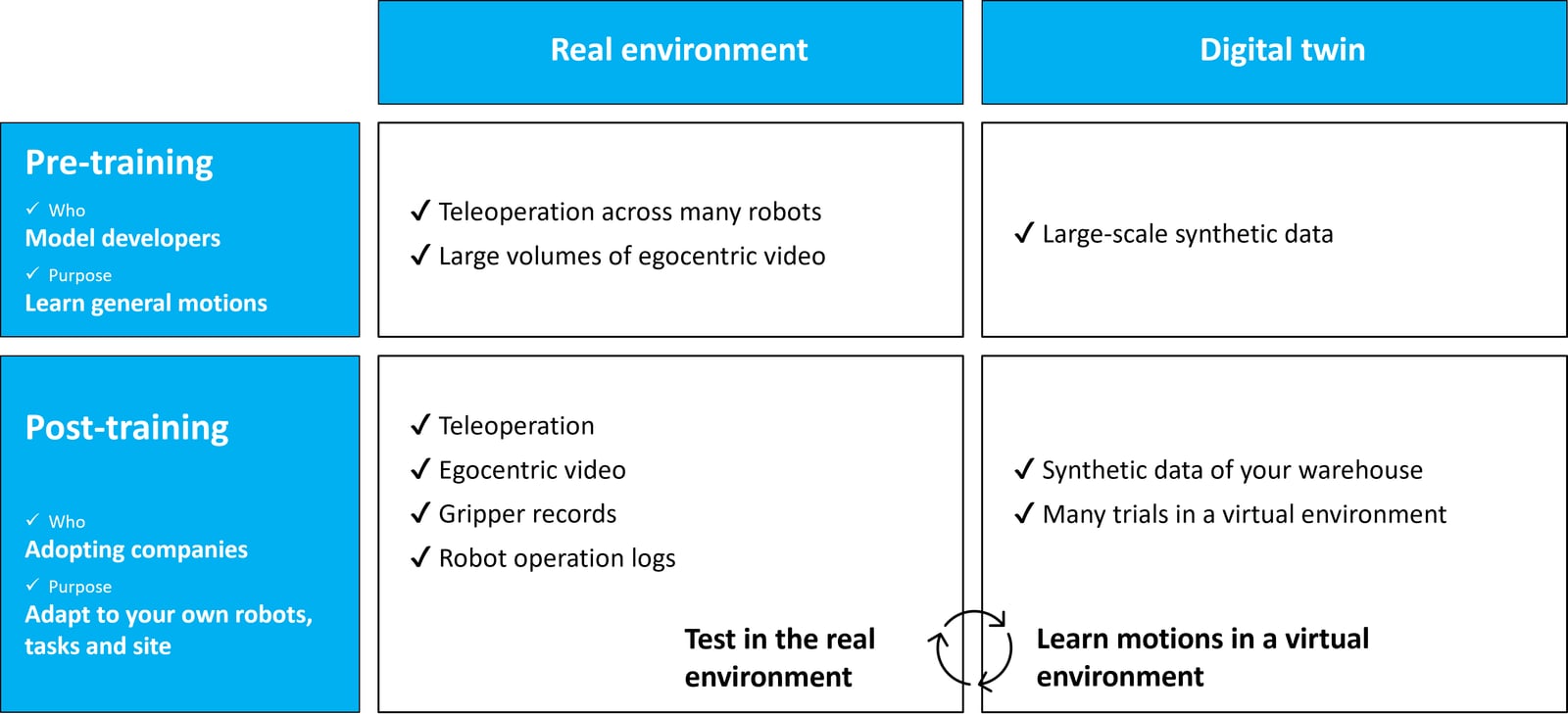
Figure 4. The two axes of training, and where the five data types fit (Nexgen Japan analysis)
4. Nexgen View: designing training data is a job for industrial engineering
Our view is that the success of a humanoid deployment turns not on the choice of machine or model, but on data collection. Any company can procure the same foundation models and the same machines. What no one can buy is data on handling your own goods in your own warehouse. Nor does filming every task in the warehouse yield data that is useful for training. You must first decide which movements, in which tasks, to collect, and how many examples of each.
The discipline that answers this question has existed for more than a century: industrial engineering (IE). Industrial engineering is a management discipline that breaks work down into fine elements, measures movements and time, and identifies and removes waste.
Column
The origins of industrial engineering
Its roots lie in early twentieth-century America. Frederick Taylor began time studies, measuring how long tasks took with a stopwatch, and in 1911 published "The Principles of Scientific Management". Around the same time, Frank Gilbreth and Lillian Gilbreth, a husband-and-wife team, pursued motion studies by observing bricklayers at work. They devised a way of recording manual work by breaking it into 18 basic motions, such as search, grasp, transport and position. Known as the therblig, this classification remains a foundation of work analysis today.
How it took root in Japan
The ideas reached Japan in the 1910s and spread under the banner of noritsu, or efficiency.
After the war they became embedded in manufacturing's improvement activities, honed into a technique by which shop-floor workers themselves measured movements and time and cut waste. Famously, this was crystallised into the Toyota Production System (TPS). Logistics followed the same path. Warehouses have broken work down into walking, searching, picking and placing, measured the time and frequency of each, and used the results to set shelf layouts and staffing. Japanese sites have veterans who can watch a task, break it into its elements at a glance and pinpoint where the waste lies.
This long-accumulated know-how carries over directly into data collection for humanoids.
Practical deployment by 2030
We expect humanoids to become practical on logistics sites by 2030. By our analysis, the price of a single humanoid in Japan could fall below the annual cost of one worker as early as fiscal 2027. From fiscal 2028, full-scale deployment in the car industry will drive mass production and push prices down further. The deployment know-how accumulated in car plants will then spread to logistics and other industries. When the machines become cheap, whether a company can put them to work straight away will depend on how well it has prepared its data.
A well-known saying is attributed to Isoroku Yamamoto, the Japanese admiral.

Isoroku Yamamoto
Show them, tell them, have them try, and praise them. Otherwise, people will not move.
Physical AI can be deployed only by living out precisely these words. Show the demonstration, give the instruction in words, let the robot try in virtual and real sites, and evaluate what worked to feed the next round of training. The sites willing to invest the same effort they would in developing people are the ones that will turn humanoids into a working force.
Frequently asked questions
Does a company need to collect its own training data for humanoid robots?
Yes, for the part that adapts the robot to its own site. General-purpose movements such as grasping and carrying come built into the foundation model, which the developer has already pre-trained. Post-training, which tunes the model to a company's own packaging, shelf heights and aisle widths, needs data captured on that site. Such data cannot be bought; the adopting company has to produce it.
Should we use teleoperation or egocentric video?
Both, in combination. Teleoperation records movement through the robot's own body, so its quality is high, but it needs a physical robot and trained operators, and is therefore expensive. Egocentric video can be gathered in volume simply by having workers wear cameras, but it must be converted to bridge the differences between human and robot bodies. On a logistics site, the practical approach is to secure volume with video and top up quality with teleoperation.
When will humanoid robots become practical on logistics sites?
Nexgen Japan expects practical deployment by 2030. By our analysis, the price of a single humanoid in Japan could fall below the annual cost of one worker as early as fiscal 2027, and from fiscal 2028 full-scale deployment in the car industry will drive mass production and push prices down further. The deployment know-how built up in car plants will then spread to logistics and other industries.
Get in Touch
We help design training-data collection for physical AI deployment
Nexgen Japan specialises, with a proven track record, in breaking operations down into their elements through industrial engineering and in designing data collection for robots. We also handle the deployment of logistics robots such as AMRs and AGVs, and the development of supporting systems. Please get in touch through our contact form.
Contact us →References and Key Sources
(6)
- IDTechEx, "Humanoid Robots 2026-2036: Technologies, Markets, and Opportunities", February 2026
- Agility Robotics, "GXO Signs Industry-First Multi-Year Agreement with Agility Robotics", 27 June 2024
- Chi, C. et al., "Universal Manipulation Interface", 2024
- NVIDIA, "Building a Synthetic Motion Generation Pipeline for Humanoid Robot Learning"
- Kotobank, "Gilbreth" (in Japanese)
- JSTOR Daily, "When Scientific Management Came to Japan"