Key TakeawaysVietnam is expanding from factory to market. The subject of China Plus One is now Chinese companies themselves, and Japanese executives on the ground agree: a second phase aimed at the consumer market has begun.
The cold chain is hardware in the south, a void in the north. 87 percent of cold storage sits in the south, and no scheduled low-temperature service bridges the 2,000 km to Hanoi. That void begins to fill this autumn.
Commerce is leapfrogging modern trade, straight to digital commerce. TMS adoption is effectively zero percent in practice — and having no legacy to protect is precisely the latecomer's advantage.
This report summarises the Japan–Vietnam Supply Chain Connectivity Study 2026, conducted from 29 July to 2 August 2026 under the joint sponsorship of Nexgen Japan, NTT e-Moi, and LOGISTICS TODAY. In and around Ho Chi Minh City, the study delegation visited the JETRO Ho Chi Minh City Office, the deep-water container terminal SSIT at Cai Mep–Thi Vai, and Long Duc Industrial Park; interviewed senior executives of Japanese shippers, logistics providers, logistics real estate developers, and IT firms; and toured VILOG 2026, Vietnam's only international logistics exhibition.
Cross-checking primary insights gathered on the ground against public statistics, this report distills the implications for Japanese logistics providers and cargo owners.
Table of Contents
- Vietnam's Role in the Restructuring of Global Supply Chains
- Macroeconomics: Double-Digit Growth as a "National Quota"
- Cold Chain: Supply Skewed to the South, Untapped Demand in the North
- Advanced Technology in the Supply Chain: The Latecomer's Advantage of a Blank Slate
- Conclusion: Be the One Who Designs the Connection
1. Vietnam's Role in the Restructuring of Global Supply Chains
"The subject of China Plus One has changed." We begin with this testimony from the field.
China Plus One refers to the diversification of production away from overconcentration in China. Ten to twenty years ago, it meant Japanese companies shifting part of their China footprint to Thailand, Vietnam, India, and other emerging economies.
Today, the subject has changed: Chinese companies themselves are the ones going abroad — moving out of their home market into third countries in high-tech categories such as display panels, solar, and EV components. Against the backdrop of U.S. tariffs on China, a distinctive pattern has emerged: goods are processed in China to the penultimate stage, with only final assembly performed in Vietnam to sidestep the higher duties. The pattern is now unmistakable. Vietnam is no longer merely a low-cost production site; it has become the buffer zone of the U.S.–China rivalry — the landing ground of choice as the world's manufacturing networks are rewired.
On the logistics side, this restructuring rests on Cai Mep–Thi Vai, the deep-water port complex in the south. The south alone accounts for roughly 65 percent of Vietnam's container throughput — 37 percent at Ho Chi Minh City's legacy ports and 28 percent at Cai Mep–Thi Vai. Growth rates tell a sharper story: in 2025, the city's legacy ports grew 6 percent year on year, while Cai Mep–Thi Vai grew 19 percent. As mega-vessels on direct U.S. and Europe services call at the deep-water port, the city ports are being recast as domestic distribution hubs — a structural shift now well underway.
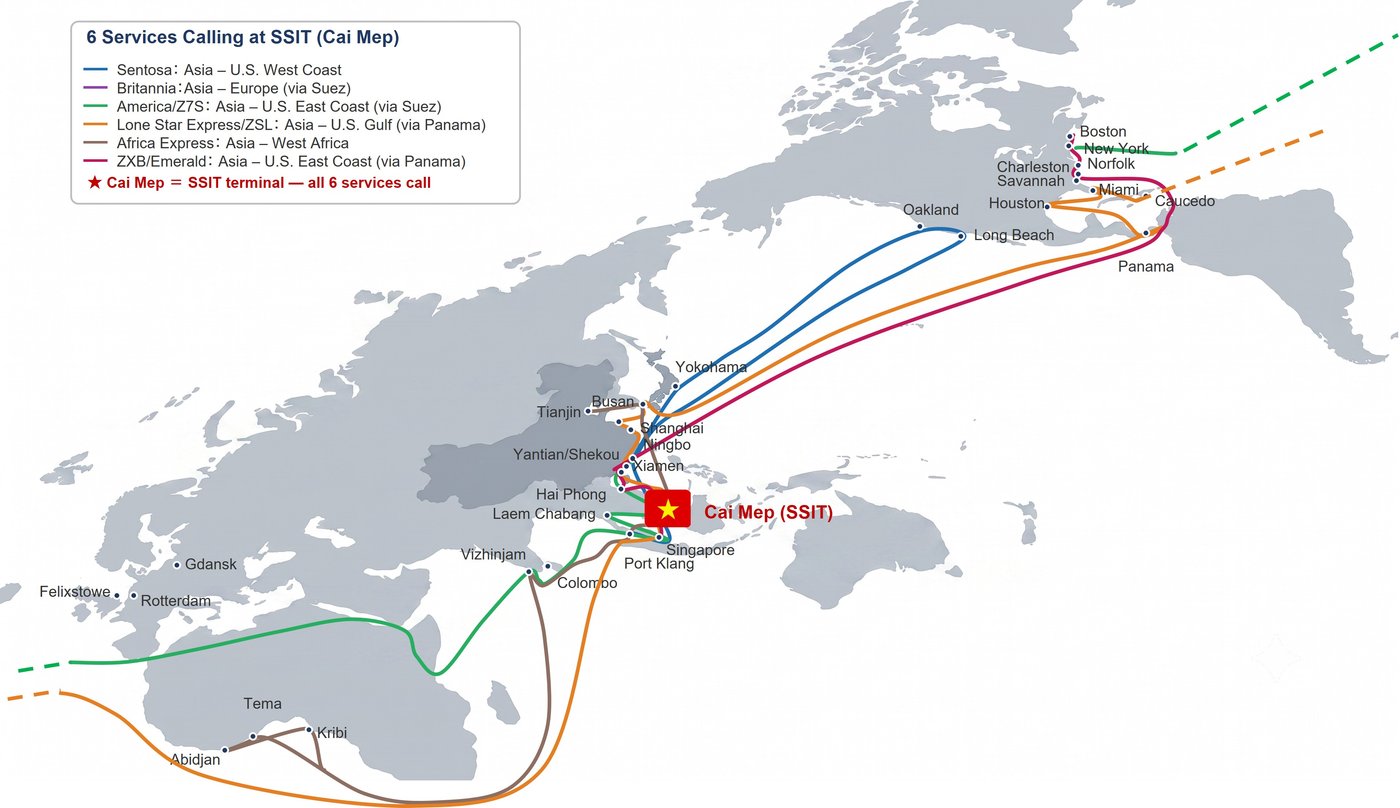
Figure 1. Cai Mep–Thi Vai's weak connectivity with Japan
SSIT, a terminal operator at Cai Mep–Thi Vai, this year secured approval for vessels of up to 250,000 DWT and 24,000 TEU — the largest in the port cluster — and operates six direct services to China, the U.S. West Coast, East Coast, and Gulf, Europe, and Africa [18].
- DWT (deadweight tonnage): the maximum weight of cargo a vessel can carry. TEU: container count in twenty-foot equivalent units.
What deserves emphasis here is the weakness of the connection with Japan. Of SSIT's six direct services, the only Japanese call is Yokohama on the U.S. West Coast loop, and Japanese carriers are almost entirely absent from the partner lineup. While Vietnam races ahead as an export hub serving China, North America, and Europe, Japan has been structurally left out of this growth corridor.
Vietnam's role as a manufacturing buffer in the U.S.–China rivalry is powering its rise as a logistics hub for the West and China alike; Japan's weak connectivity, however, will weigh on Japan–Vietnam trade.
Beyond its consolidation as an export manufacturing base, two additional roles — consumer market and digital proving ground — are expanding, a change significant enough to warrant its own place in this report.
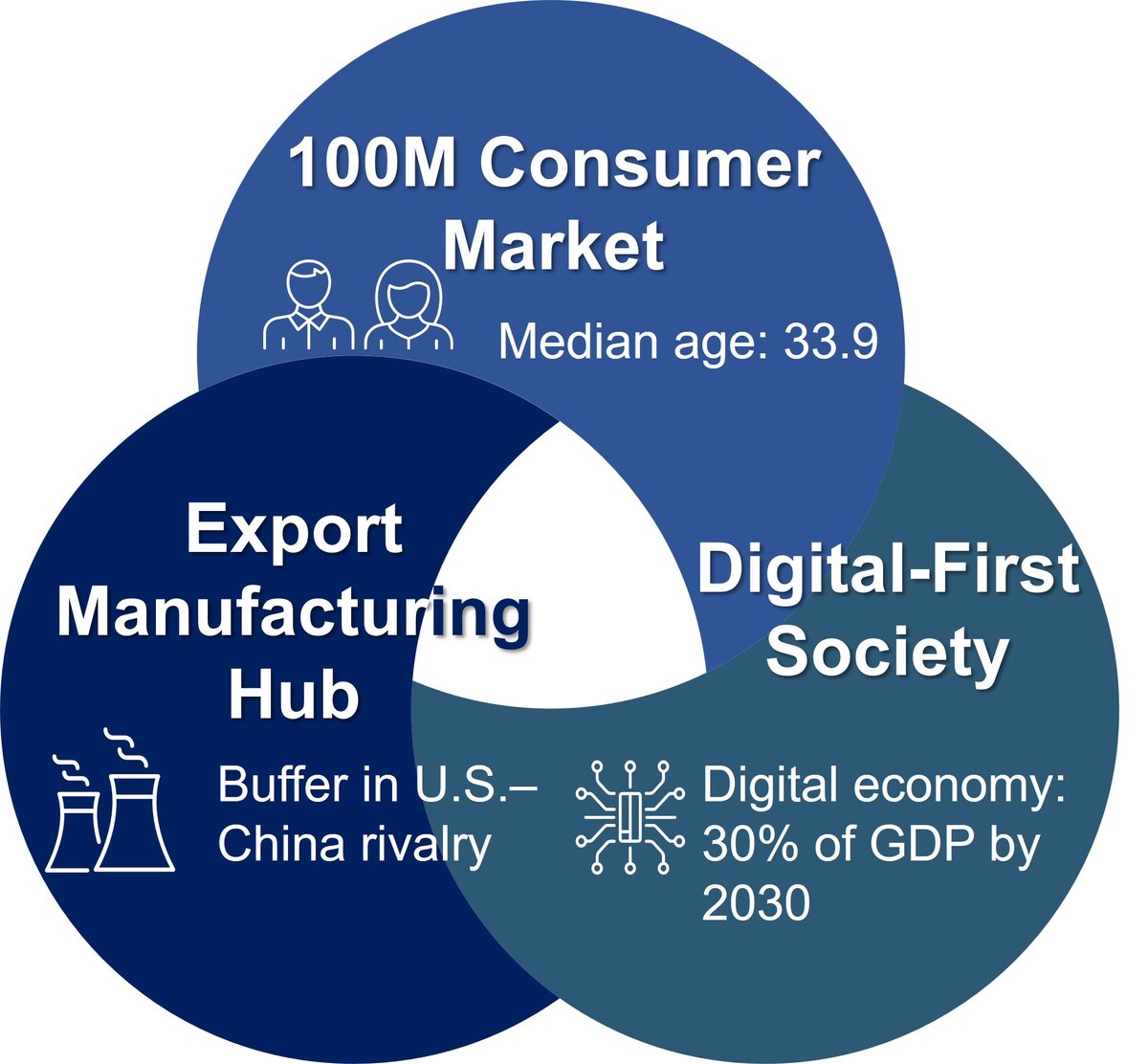
Figure 2. Vietnam's expanding roles
Notably, Japanese executives on the ground were unanimous: the wave of manufacturing-driven entry has run its course, and a second phase — aimed at the consumer market — has begun. This is the Vietnam that Japanese companies must now confront.
2. Macroeconomics: Double-Digit Growth as a "National Quota"
According to interviews with JETRO Ho Chi Minh City and Nexgen's review of public statistics, real GDP grew 8.02 percent in 2025 and accelerated to 8.18 percent in the first half of 2026 [3][4].
On top of this, the National Assembly has resolved to target growth of at least 10 percent for 2026 [1], and the 14th Party Congress in January 2026 adopted long-term goals of 10-percent-plus average annual growth for 2026–2030, per capita GDP of roughly $8,500 by 2030, and high-income advanced-economy status by 2045 [2].
Figure 3. Vietnam's key economic indicators and government targets
| Indicator | Details |
|---|---|
| Recent performance | Real GDP growth of 8.02% in 2025; 8.18% in H1 2026 [3][4] |
| 2026 government target | GDP growth of 10% or more (National Assembly resolution, November 2025) [1] |
| Medium- and long-term goals | 10%+ average annual growth for 2026–2030; per capita GDP of ~$8,500 by 2030; high-income status by 2045 [2] |
| Demographics | Population ~102 million; median age 33.9. Middle class expected to double from 2023 to 2026 [13] |
| Logistics costs | 16–17% of GDP, roughly double advanced-economy levels — the principal bottleneck to high growth [14] |
When a country growing at 8 percent sets a double-digit target, it is not wishful thinking; it is a declaration of intent by the governing regime.
"It cannot be dismissed as mere political sloganeering," one interviewee cautioned. Behind it lies acute demographic anxiety. Vietnam's population of roughly 102 million is young, with a median age of 33.9 [13], yet those aged 65 and over already exceed 10 percent, and the working-age population is projected to plateau by the late 2030s. The Party leadership's urgency is simple: develop sufficiently before 2040 arrives, or it will be too late.
The To Lam administration has consolidated central ministries from 18 to 14 and provincial-level governments from 63 to 34, while the pace of legislative amendment has risen from roughly 30 to 100 laws per year. "Legislating at a run" — the sheer speed of institutional change, and the uncertainty it carries, cuts both ways for foreign firms.
Infrastructure is being built with the same urgency and at the same speed.
Long Thanh International Airport is slated to begin commercial operations on 1 December 2026, and construction of the $67 billion North–South high-speed railway is due to start the same month [17]. Expressway mileage in service has roughly tripled in five years, from 1,163 km at end-2020 to over 3,300 km at end-2025.
Vietnam, in short, is pairing aggressive macroeconomic growth targets with infrastructure development at a pace that borders on forceful, as it engineers its transformation into a consumer market. It is on this foundation that we explore the logistics opportunity in the next chapter.
3. Cold Chain: Supply Skewed to the South, Untapped Demand in the North
Among the logistics functions underpinning economic growth, this study focused on the cold chain. The conclusion first: Vietnam's cold chain is defined by three asymmetries — hard infrastructure in place in the south, a near-void in the north, and operational software immature nationwide.
- Cold chain: a logistics system that keeps goods continuously stored and transported at low temperatures — frozen, refrigerated, or chilled — from production to consumption.
3.1 Ho Chi Minh City First: Concentrated Investment, and the Beginnings of the 2,000 km North–South Link
Nationwide capacity at large commercial cold storage facilities stands at roughly 1.32 million pallets — 87 percent concentrated in the south, versus just 11 percent in the north and 1 percent in the centre [5]. Japanese cold and frozen warehouses keep opening around Ho Chi Minh City at a pace locals describe as "overbuilding".
Zoom out to the national level, however, and cold storage capacity per 10,000 people is just 132 pallets — far below Thailand's 204, China's 913, and Japan's 1,592 [5]. Far from oversupplied, the market in absolute terms is still in its infancy. Indeed, Japanese shippers spoke not of oversupply but of relief: "more options make our lives easier". The market is set to keep expanding, with growth forecast at over 13 percent annually through 2034 [6].
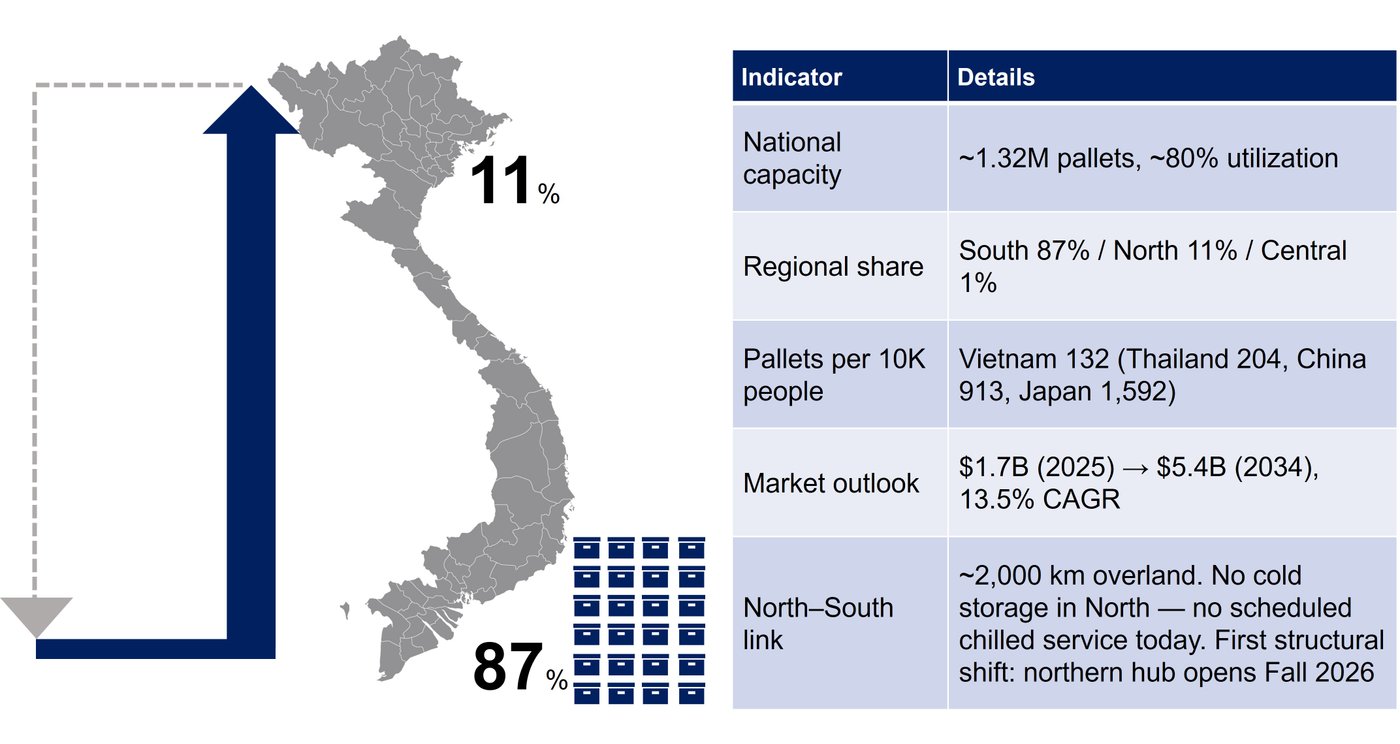
Figure 4. Geographic mismatch of demand and supply capacity
The problem is that the geography of cold chain demand makes north–south connection impossible today. From the southern commercial capital of Ho Chi Minh City to the northern capital of Hanoi is roughly 2,000 km by road. No scheduled chilled-temperature service currently bridges that distance. The reason is simple: the north has no cold storage to receive the goods. In interviews with local shippers, we heard: "Because no frozen logistics on the Hanoi side can support daily ordering and daily delivery, we cannot move products made in Ho Chi Minh City to our Hanoi store network — the northern expansion of multiple Japanese retailers and food companies is stalled, entirely because of logistics".
The demand exists. The buyers exist. The goods simply cannot get there.
Yet the long-frozen cold chain divide is about to move. Konoike Transport, which has built its domestic north–south refrigerated consolidation service to roughly 5,000 tonnes a month across three weekly departures, is expected to open a cold storage facility in Hanoi this autumn [7][8]. Only once a northern cold storage node exists can south-to-north temperature-controlled trunk transport and daily delivery from Hanoi inventory function as a system. The delegation regards this as Year One of the north–south cold chain.
The next challenge is one-way cargo imbalance. The south has abundant cold cargo to send north — frozen foods, fresh produce, processed seafood — but little cold freight returns from north to south. Full outbound and empty backhaul keeps rates high and transport economics unstable.
Flip the problem over, however, and it becomes the opportunity. For businesses that generate cold cargo in the north — food manufacturing, agricultural and seafood processing, customs clearance and distribution centres for imported foods — discounted backhaul trunk capacity is there for the taking. In other words, the cargo imbalance is not a barrier to entry; it is the very investment thesis for going north.
Indeed, north–south transport once ran the other way: components flowed south from the assembly industries clustered in the north, and northbound return legs ran chronically empty. That flow is now filling with consumer goods moving from south to north. This reversal of the wind is the logistics expression of Vietnam's centre of gravity shifting from production to consumption.
More concretely: cold-chain-dependent businesses entering now can, by manufacturing in the north, potentially capture both Hanoi and Ho Chi Minh City demand at stable margins.
3.2 Demographics: In a Country in Its Early 30s, Dinner Tables Are About to Go "Cold"
The trajectory of cold chain demand is all but dictated by demographics.
A median age of 33.9 corresponds to Japan in the early 1980s. Urbanisation and dual-income households are advancing, and the middle class is estimated to have doubled from about 13 percent in 2023 to 26 percent in 2026 [13]. Demand for frozen foods, chilled desserts, and home meal delivery is highly income-elastic — it ignites the moment disposable income crosses a threshold — and Vietnam, with per capita GDP now above $5,000, is standing squarely on that threshold.
A Japanese confectioner operating locally is emblematic. A wagashi product that sells a few units per store per day in Japan sells 70 a day in Vietnamese convenience stores. Its flagship products are designed frozen-first — 365 days of frozen shelf life, 180 days at ambient temperature after thawing — and it serves the daily orders of inventory-averse local retailers with piece-level fulfilment from frozen warehouses.
The combination of a young population and frozen-first product design will structurally lift cold chain demand for the next decade.
3.3 Commerce: The Leapfrog over Modern Trade, and How to Define the Opportunity
Traditional trade — the family-run mom-and-pop shop — still accounts for roughly 85 percent of Vietnamese retail.
Having been posted to Vietnam, the author has watched the split hold at 15-to-85 since the 2010s. A decade ago, modern trade was said to be finally arriving. It never did. Modern trade penetration in food retail remained around 12 percent as of 2023 [9][10].
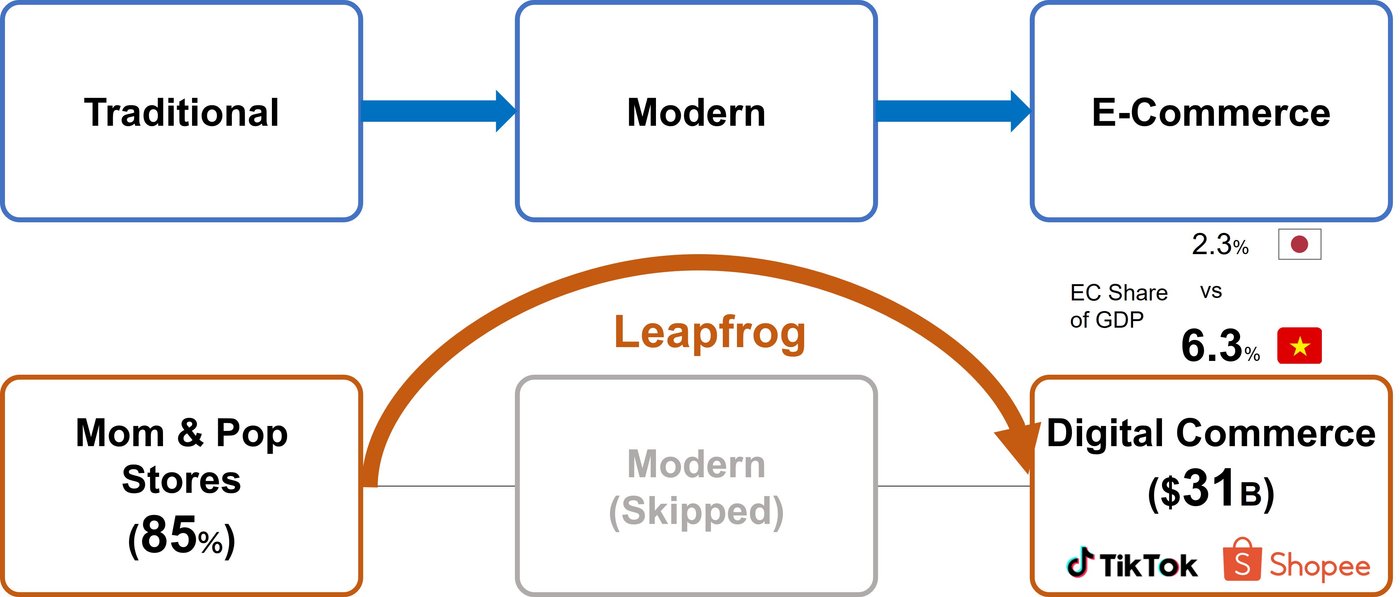
Figure 5. The leapfrog in Vietnamese commerce
E-commerce, by contrast, has penetrated daily life at an altogether different speed. The goods e-commerce market reached roughly $31 billion in 2025, up 25 percent year on year [20]. Shopee (about 56 percent) and livestream-powered TikTok (about 42 percent) form a duopoly [12], and social and live commerce are now everyday behaviour for young urban consumers.
Digital commerce's weight comes into sharper relief against Japan. In absolute terms, Vietnam's roughly $31 billion (about ¥4.8 trillion) is only a third of Japan's ¥15.3 trillion e-commerce market [19][20]. As a share of nominal GDP, however, the ranking flips: roughly 6.2 percent for Vietnam versus 2.3 percent for Japan — fully 2.7 times Japan's footprint relative to the size of the economy.
The growth differential is more decisive still. Remarkably, Vietnamese digital commerce keeps compounding at around 25 percent a year. In a country whose GDP itself grows at 8 percent, e-commerce is growing three times faster — a stark contrast with mature Japan's low single digits. Digital commerce is no longer a supplementary channel; it is the primary infrastructure defining Vietnamese commerce.
Vietnam's commerce, in short, is not climbing Japan's staircase from independent shops to supermarkets and convenience stores and then to e-commerce. A leapfrog is underway — jumping straight from traditional trade over modern trade to digital commerce.
- Leapfrogging: the phenomenon of emerging economies skipping the development stages traversed by advanced economies and jumping directly to the latest technologies and business formats.
This reading fundamentally changes how a logistics business should be designed. In Japan's experience, retail modernisation first grew store-network distribution centres, and e-commerce logistics was layered on top.
In Vietnam, that middle stage remains thin, and the requirements of e-commerce-style logistics arrive first: peri-urban fulfilment centres, motorbike last-mile delivery, frozen and chilled home delivery. Warehouses located to allow motorbike delivery into the city without using expressways are already being fought over, with e-commerce operators' real demand driving logistics real estate pricing (interview with a Japanese developer).
Redefined in this context, the cold chain opportunity resolves into three plays.
Three plays in Vietnam's cold chain
Frozen and chilled fulfilment for e-commerce and digital commerce
Temperature-controlled food e-commerce has only just begun.
A national distribution network combining north–south trunk transport with northern distribution centres
The northern void is the opening.
Commercialising the soft side: operational quality
Field testimony was consistent: "even impressive frozen warehouses manage temperature loosely while goods sit awaiting shipment"; "containers get opened at the port on import, breaking the cold chain"; "return rates on retail delivery reach 30 percent in some cases".
With hardware supply now in place, the source of value shifts to the management of temperature and time — precisely the operational quality at which Japanese logistics excels. But transplanting Japan-grade quality wholesale will not clear the market on price. The craft lies in entering where quality can be priced in, such as the affluent segment for Japanese food products, while localising everything else.
We also heard that mom-and-pop shops unable to cope with mandatory e-invoicing have begun to close. The 85 percent bastion, we believe, will be eroded not by modern trade but by digital commerce and by organised retailers with the capacity for regulatory compliance.
4. Advanced Technology in the Supply Chain: The Latecomer's Advantage of a Blank Slate
The Vietnamese government has placed AI and digital at the core of national strategy.
Politburo Resolution 57, issued at the end of 2024, designated science, technology, and digital transformation as top national priorities [15]; the National Digital Transformation Strategy 2026–2030, approved in July 2026, targets a digital economy exceeding 30 percent of GDP, AI adoption by more than 40 percent of SMEs, and sector-specific digital platforms including logistics [16].
Implementation is advancing too. Telecom leader Viettel has commissioned a smart sorting hub processing 1.4 million parcels a day, cutting labour costs by 60 percent [14], and AWS opened an in-country data centre in 2026 — putting the data-residency barrier to cloud adoption on a path to resolution (field interviews).
Descend to the shop floor, however, and the landscape inverts. According to local IT firms, adoption of transportation management systems (TMS) is effectively zero percent in practice. Warehouse management systems (WMS) register 40 to 50 percent in the statistics, but most of that counts the inventory modules of accounting systems; genuine execution systems on the floor amount to perhaps 10 percent. Most logistics operations still run on Excel and manual work. Between national strategy and the front line, there is a gap.
The delegation reads this gap as a latecomer's-advantage business opportunity.
Japan spent a quarter century deploying WMS, TMS, and order management systems in silos, and is now re-integrating them at enormous cost. Vietnam has no legacy systems to protect. It can therefore implement, from day one, an integrated platform in which commercial and logistics data are designed as one.
Solutions purpose-built for exploding digital commerce — e-commerce, live commerce, social commerce — are also needed. There is no reason to export Japanese logistics packages to a country whose circumstances differ. The delegation intends to begin concrete discussions with local partners on a business hypothesis: building a unified WMS-TMS logistics suite for the Vietnamese market.
Two caveats apply.
In this market, local fit beats technical sophistication. What drove LINE and WeChat out of the messaging market was Zalo, the most low-tech domestic app of all. The premise is not porting a feature-rich Japanese package but redesigning around local commercial practice.
Vietnam's posture toward AI is to deploy first and refine accuracy in operation — a pointed contrast with Japan's tendency to idle in proof-of-concept. Companies that cannot match this tempo will win on technology and lose on speed.
5. Conclusion: Be the One Who Designs the Connection
The findings distill as follows.
Vietnam is expanding from factory to market. The cold chain is structurally asymmetric — hardware built out in the south, a void in the north — and that northern void begins to fill this autumn. Commerce is leapfrogging straight to digital commerce, rewriting the requirements placed on logistics from the ground up.
To Japanese logistics providers and cargo owners weighing entry, Nexgen Japan offers three recommendations.
Recommendation 1: Enter the northern cold chain before the void fills.
The cold storage void around Hanoi is small enough that a first mover could set the de facto standard within a few years. Rather than hanging back for fear of one-way cargo, build the investment case around creating northern cold freight — food manufacturing, agricultural and seafood processing, distribution centres for imported foods — bundled into the entry. Precisely because backhaul runs empty today, trunk transport capacity can be locked in on favourable terms.
Recommendation 2: Build the IT platform in Vietnam first, not in Japan.
A market where TMS adoption is "effectively zero" is, read differently, a market where the design philosophy is yours to choose. An information backbone for the north–south cold chain that natively unifies temperature, shelf life, vehicles, inventory, and payments could even be proven in Vietnam first and re-imported to Japan. The natural owner is a pairing of a company that controls physical logistics with one that carries the digital.
Recommendation 3: Go as a coalition that pools functions, not as a lone entrant.
What we heard repeatedly on the ground was not a call to replicate a large integrated logistics major, but concrete demand for discrete functions: bonded warehouse operation, temperature-control quality, material handling, systems, and talent development. For Japan's mid-sized logistics companies in particular, a delegation-style entry model that bundles functions across several firms is the realistic path — and this study is itself the first step. The long-horizon investment of developing cold chain talent, too, becomes bearable in coalition.
The Japan–Vietnam supply chain will not connect itself. As the near-absence of Japanese ports from Vietnam's direct services makes plain, Japan will never be woven into Vietnam's growing logistics network automatically. Connection is a word that belongs to those who deliberately design it. Nexgen Japan stands on the side that draws the blueprint.
-
Field interview content in this report is based on the on-site study conducted from 29 July to 2 August 2026 (meetings with the JETRO Ho Chi Minh City Office, SSIT, Long Duc Industrial Park, and Japanese shippers, logistics providers, logistics real estate developers, and IT firms).
-
Information in this report is current as of early August 2026. Primary sources and press reports cited are identified in the text.
Members of the delegation are each reporting on the Japan–Vietnam Supply Chain Connectivity Study from their own vantage point. For a fuller picture, we encourage readers to consult the related articles below.
Questions we often receive from practitioners
Why is Vietnam's cold chain so weak in the north?
Because the supply-side infrastructure is concentrated in the south. Some 87 percent of cold-storage capacity sits in the south, and no scheduled low-temperature service yet bridges the 2,000 km between north and south. The north does not lack demand; it lacks the means to move goods and the places to store them. With return-leg capacity currently running empty, trunk transport can be secured on favourable terms, so the timing for entry is, if anything, right.
Does Vietnam's effectively zero TMS adoption stand in the way of market entry?
No. It is the condition for a latecomer's advantage. In a market where no legacy systems are in place, no time is lost persuading users to switch or reconciling new tools with existing workflows. A design that handles temperature, shelf life, vehicles, inventory and payments as one integrated data set can be deployed from day one. A concept that is hard to realise in Japan because of legacy constraints can even be proven in Vietnam first.
Does China Plus One still mean what it used to?
The subject has changed. The phrase once described Japanese and Western companies securing production sites outside China; today the dominant movement is Chinese companies themselves moving into Vietnam. At the same time, Vietnam has entered a second phase, from being used as a factory to being addressed as a consumer market of 100 million people. Reading it as mere diversification of production sites leads to the wrong objectives for market entry.
Private Briefing
We will read the findings against your own investment thesis
Entry into the northern cold chain, the investment case for the north–south trunk, the concept for a unified WMS-TMS platform. We offer private briefings that translate the arguments set out here into specifics for your organisation, including coalition-style entry models and introductions to local partners.
Get in touch →References and Key Sources
(20)
- VnExpress International. (2025-11-13). National Assembly sets 10% GDP growth target for 2026.
- Viet Nam Government Portal. (2026-02-14). Full Resolution of 14th National Party Congress.
- National Statistics Office of Vietnam (NSO). (2026-01). Socio-economic situation in the fourth quarter and 2025.
- VietnamPlus. (2026-07-06). Vietnam posts 8.18% GDP growth in H1 2026.
- C+ Consulting. (2026-07-19). Vietnam Cold Storage Market 2026-2030: A Strategic Anchor and Map of Regional Opportunities.
- IMARC Group. (2026). Vietnam Cold Chain Logistics Market Forecast 2026-2034.
- Daily Cargo. (2026-01). Konoike Transport to open Hanoi warehouse as domestic North–South reefer volumes rise 2.5x (in Japanese).
- Japan Maritime Daily. (2023-11-16). Coverage of Konoike Transport's refrigerated logistics business in Vietnam, including planned bases in Hanoi and Da Nang (in Japanese).
- Vietcap Securities. (2024-10). Grocery Sector Report.
- B-Company. (2025-02). The Modern Trade leading Vietnam's retail market.
- Vietnam Briefing. (2026). Vietnam's E-Commerce Sector Outlook in 2026.
- Vinex. (2026). Vietnam's E-commerce Market: 2025 Performance and 2026 Outlook.
- Vietnam Briefing. (2026-07-28). Understanding Vietnam's Middle Class: Size, Spending Patterns and Opportunities.
- VietnamNet. (2025-01-10). Vietnam tackles high logistics costs with automation and smart hubs.
- Politburo of the Communist Party of Vietnam. (2024-12-22). Resolution 57-NQ/TW on breakthrough development in science, technology, innovation, and national digital transformation.
- Vietnam News. (2026-07-21). Viet Nam approves national digital transformation strategy for 2026-30 (Decision 1266/QD-TTg).
- VnExpress International. (2026). Vietnam to begin construction of $67B high-speed railway in December 2026.
- SP-SSA International Terminal (SSIT). (2026-07). SSIT information pack obtained by the delegation, including Vietnam Seaports Association statistics.
- Ministry of Economy, Trade and Industry (Japan). (2025). E-Commerce Market Survey (B2C goods e-commerce market size).
- Ministry of Industry and Trade of Vietnam (MoIT), Agency of E-commerce and Digital Economy. (2026). Vietnam E-commerce White Book.
Page 1 of 3