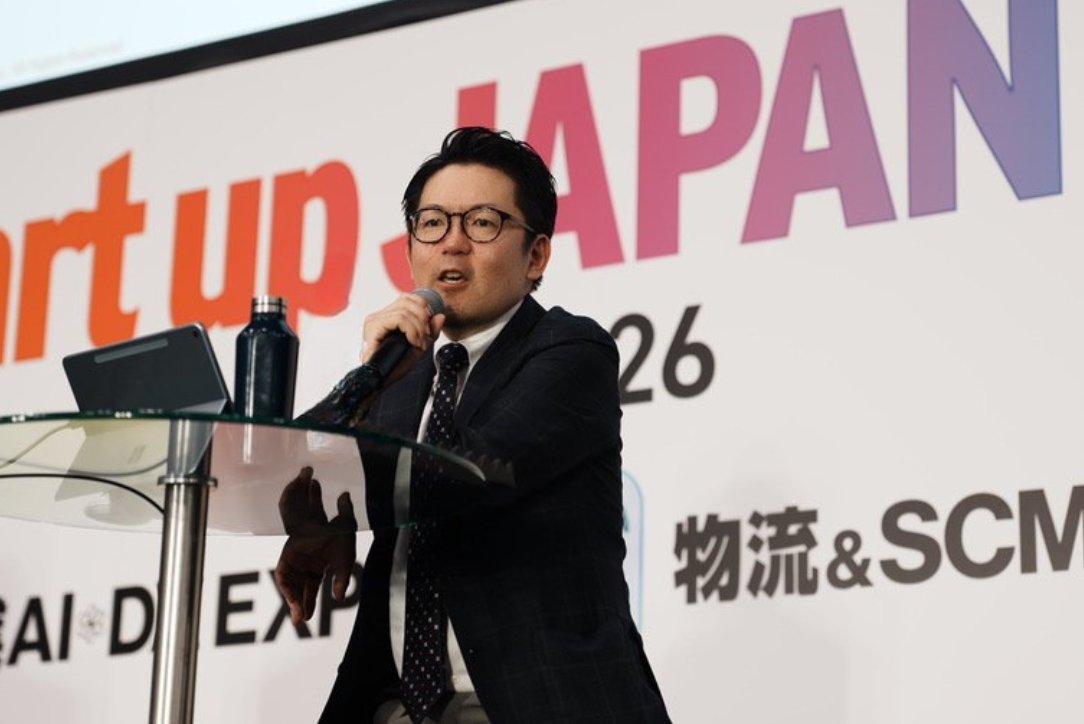
On 15-16 April 2026, Ariki Ono — CEO and Logistics AI Architect of Nexgen Japan — delivered a keynote at the "Logistics & SCM Transformation Tech EXPO (LGX 2026)," held alongside "Startup JAPAN EXPO 2026" at Makuhari Messe (Mihama-ku, Chiba). This report looks back on the session.
Session Overview
The keynote theme was "Physical AI — Japan's Winning Path Lies in Operational Data." As investment in Physical AI — defined as hardware and robots embedded with AI-driven intelligence and decision-making — accelerates at an unprecedented scale in the United States and China, the session asked: where can Japan's logistics sector compete? The discussion made clear that Japan, lagging behind the US and China in development, has entered a phase in which it must accelerate implementation and the accumulation of operational data.
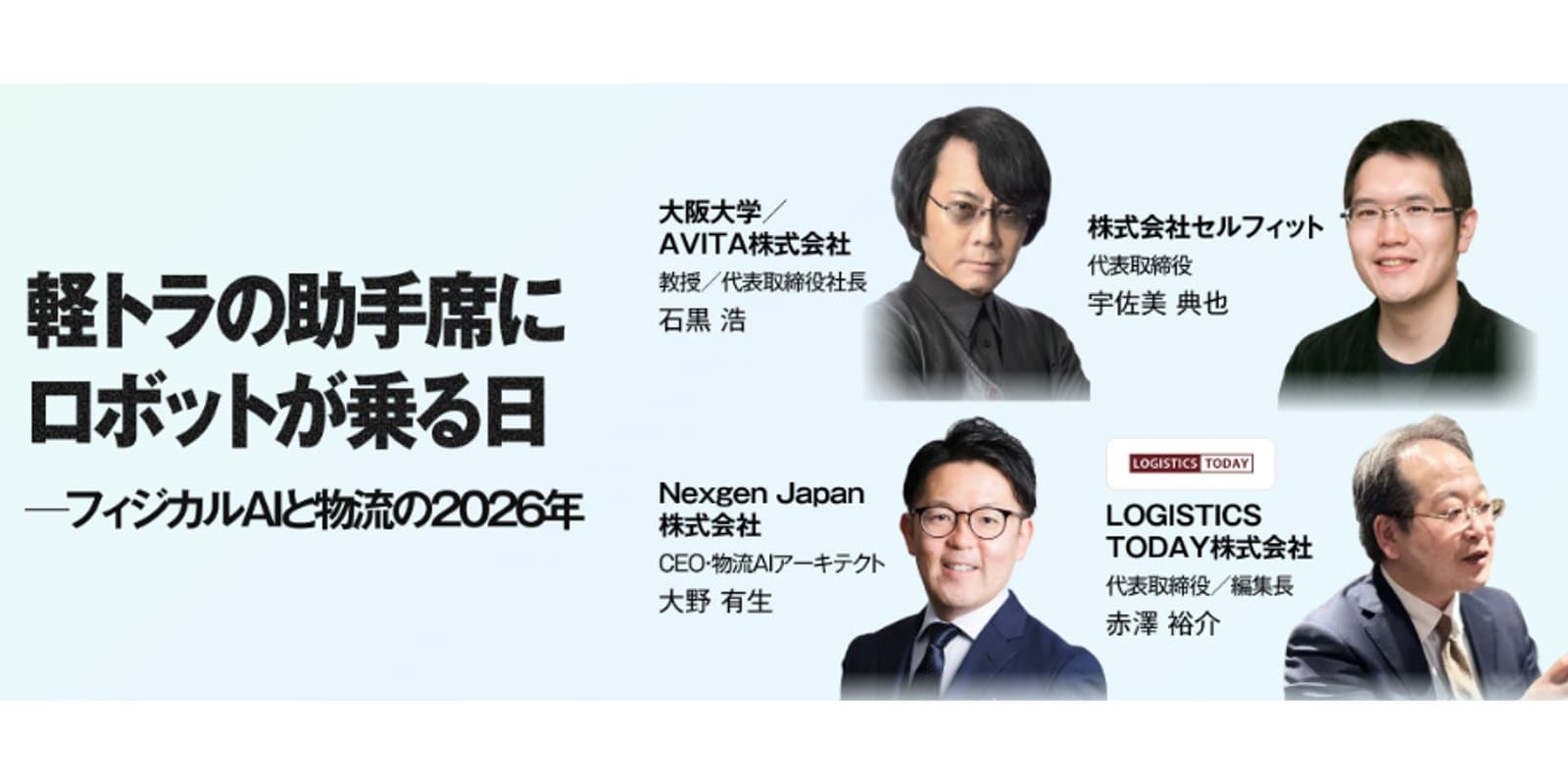
The panel featured Hiroshi Ishiguro, Professor at Osaka University and CEO of AVITA Inc.; Noriya Usami, CEO of Selfit Inc.; and Ariki Ono, CEO and Logistics AI Architect of Nexgen Japan. The session was moderated by Yusuke Akazawa, Editor-in-Chief of LOGISTICS TODAY.
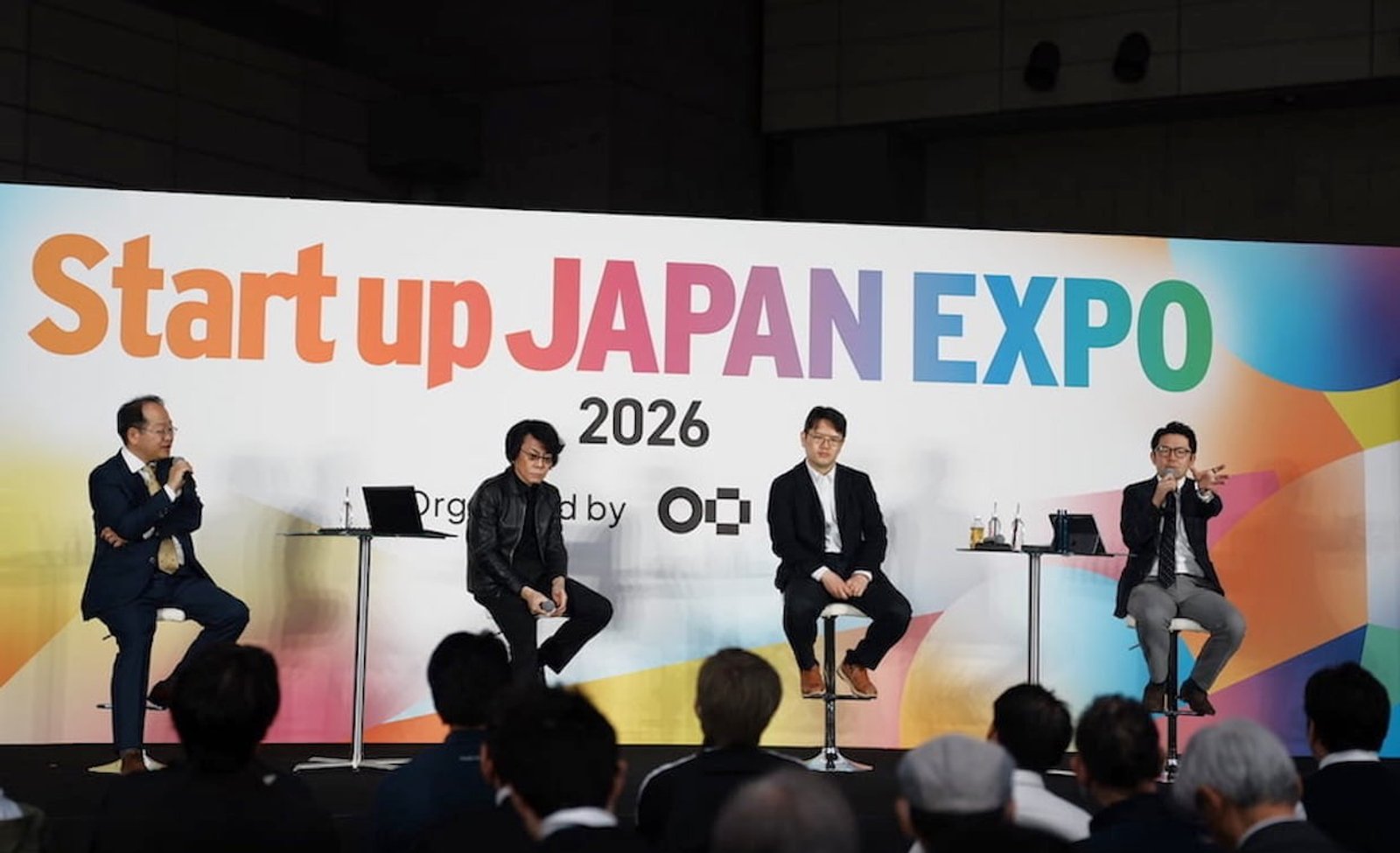
LGX 2026 Keynote Panel (from left: Yusuke Akazawa, Hiroshi Ishiguro, Noriya Usami, Ariki Ono)
Ono (Nexgen Japan): From a Development Race to an Implementation Race — "Two Years to Build Up Data"
Ono defined Physical AI as "hardware and robots embedded with AI-driven intelligence and decision-making," and drew attention to its decisive difference from software AI before delivering the following message to logistics operators.
Physical AI has a defining property: it cannot be rolled back. Unlike software AI, once it breaks something or injures someone on the floor, there is no undoing it. That is precisely why a design in which warehouse and transport workers hold the authority to stop the robot must be a precondition for implementation.
The global market will grow from JPY 60 trillion in 2026 to over JPY 500 trillion by 2040. The United States and China will invest JPY 110 trillion combined over the next five years; Japan, just JPY 1 trillion. Competing in the development race is no longer realistic.
However, from 2028, Boston Dynamics' Atlas — built in partnership with Hyundai — will enter production sites. Once humanoids reach mass production and costs fall, the ROI barrier (the payback period on a humanoid purchase) will collapse. At that point, putting the humanoid you have purchased to work in your own operations will require your own operational data. The next two years are not a window in which to chase the US and China in a foundation-model development race — they are a window in which to describe your operations with high resolution and accumulate data at scale. To everyone in industry: this is the single message I want to leave you with.
Ishiguro (AVITA): Japan's Strength Lies Not in Foundation Models, but in the Implementation Layer
Professor Ishiguro argued that Japan need not compete with the United States in developing foundation models. Rather, Japan's enduring strength lies in the "implementation layer" — integrating AI with sensors and surrounding systems to put it to practical use in factories and daily life. Citing the example that 60 percent of iPhone components are made in Japan, he argued for Japan's advantage on the hardware and implementation side. Ishiguro, who is advancing the social implementation of avatars (remotely operated robots), positioned Physical AI and avatars within broadly the same lineage, while suggesting that humanoids capable of working safely and reliably in domestic settings are still some way off.
Usami (Selfit): Different Paces Inside and Outside the Warehouse — The Challenge of "Origin–Destination Coordination"
Drawing on his experience operating "DIAq," a matching platform for light-cargo delivery, Usami pointed out that automation inside the warehouse advances rapidly because standardisation can be driven within a single organisation, whereas automation outside the warehouse — last-mile delivery — cannot move forward unless the standards of the shipping party (origin) and the receiving party (destination) are aligned. He explained the structural problem in which an asymmetry of awareness between origin and destination shippers is impeding outside-the-warehouse automation.
He further noted that, with the obligation to appoint a Chief Logistics Officer (CLO) coming into full force in April 2026, origin–destination coordination and standardisation will be the defining themes for this year and next.
Closing — Nexgen Japan's Perspective
The phase in which Japan could compete with the US and China in raw development is already behind us. The arena where Japanese companies can still compete is "implementation" and "the accumulation of operational data." Capturing your own workflows, constraints, and decision-making criteria as data, and building the foundation that allows externally developed intelligence to be adapted to your own operations — this, we believe, is the most critical task of the next two years.
Nexgen Japan, through hands-on support for AI implementation and operational-data preparation in the logistics and SCM domain, will continue to work alongside our clients to find Japan's winning path at the implementation layer. Please feel free to consult with us on the design, accumulation, and utilisation of operational data for the Physical AI era.
Related Link
LOGISTICS TODAY article on the day's session: "Physical AI — Japan's Winning Path Lies in Operational Data" (published 23 April 2026) https://www.logi-today.com/943210
Related Seminar
The Physical AI Shock — Robots Reshaping Industry and Work
Bring the "winning path at the implementation layer" discussed here home to your own operations. This programme systematises global trends in Physical AI, the three-year outlook, and sector-specific impacts on manufacturing, logistics, healthcare, and construction, with a workshop to design your organisation's AI collaboration blueprint.
View seminar details →