
Key TakeawaysThe AI divide is not a gap between the "haves" and "have-nots". Where the digital divide was about access to information, the AI divide is about the skill to use AI. Everyone is touching it, yet outcomes are pulling sharply apart.
"Keep learning and you will catch up" breaks down past a certain point. The cleverer AI becomes, the faster the fiddly operational details — prompt techniques, the quirks of a particular model (surface skills) — become obsolete. We must confront the paradox that the details you learned are no longer needed next quarter.
What decides the contest are "core skills" and "hidden front-runners". Scoping the task, articulating the premises, and evaluating the output — the abilities that hold up whatever model you use — are the true source of the performance gap. Within an organisation, the most realistic prescription is to elevate the "shadow AI users" who are already at work.
Table of Contents
- How social divides arise and disappear — and their history
- What the AI divide is
- Surface skills and core skills
- Staying in the Race
1. How social divides arise and disappear — and their history
Past technologies waited for people. The shift from stone to bronze took several millennia; the shift from bronze to iron took several centuries. After that, technologies such as the wheel, papermaking and the water mill all took centuries to settle into society.
From there, the rhythm of technological change grew progressively shorter. The printing press of the mid-fifteenth century took roughly a century to free the circulation of knowledge from human copyists. Steam power in the late eighteenth century and electricity in the nineteenth modernised the foundations of society within decades. The car, the telephone and the radio of the early twentieth century then transformed the urban landscape and home life within a single generation. Even so, each transition still allowed enough time to build the occupations, schools and cultural habits that make a new technology ordinary.
From the latter half of the twentieth century, however, technological change shifted up a gear and accelerated. According to compilations by Our World in Data, the time for the personal computer to reach 50% adoption in US households was about twenty years; for the internet, about fourteen; and for the smartphone, only about five. The digital divide is the inequality that emerged amid this acceleration. And onto that has now arrived the AI divide.
Lining up the time it takes for a technology to diffuse through society (to reach 50% adoption), the acceleration is plain to see.
Figure 1. Time for a technology to diffuse through society (to reach 50% adoption)
| Technology | Time to reach 50% adoption |
|---|---|
| Stone Age → Bronze Age | Several millennia |
| Bronze Age → Iron Age | Several centuries |
| Printing press (15th century) | ~100 years |
| Steam power & electricity (18th–19th c.) | Several decades |
| Car, telephone & radio (early 20th c.) | One generation |
| Personal computer | ~20 years |
| Internet | ~14 years |
| Smartphone | ~5 years |
| Generative AI (53% global usage; 3 years from launch) | ~3 years |
- Source: based on compilations from Our World in Data and others.
2. What the AI divide is
The AI divide is not a simple extension of the digital divide. Where the digital divide was an inequality of "access to information", the AI divide is an inequality of "the skill to use it". Within three years of launch, generative AI reached 53% of the world's population. Faster than any technology before it, everyone is touching it. The question is no longer one of "haves and have-nots"; it is an inequality carried right into the work of knowledge workers themselves — summarising, analysing, writing, coding and supporting decisions.
So why does inequality arise in the work of knowledge workers? The distinctiveness of the AI divide can be organised into two points.
First, the pace of evolution is on another order of magnitude. Generative AI gives society no grace period in which to master it. The cycle on which AI advances is measured not in generations but in months. Think back. Just after ChatGPT appeared, people everywhere began using it to spar over ideas and draft reports — yet, in hindsight, the output was about seventy per cent of the way there and unusable unless you reread it yourself. Then Deep Research changed the scene entirely: AI could complete an external-environment analysis that swept across information sources worldwide. And since the dramatic jumps in accuracy around Google's nano-banana and Claude's Opus 4.6, the very word "hallucination" has been fading from everyday conversation.
Second, a curious paradox arises. The more capable AI becomes, the more the fine operational skills required of the human side — techniques for writing prompts, coping with the quirks of a particular model, and so on — actually become obsolete. The intuitively plain assumption that "the more you learn, the more you catch up" breaks down at a certain level. The phenomenon can occur in which the details you learned are no longer needed the following period.
Through these two features — speed and paradox — the AI divide has a structure in which ease of entry and a widening gap in outcomes advance at the same time. This is the decisive difference from the digital divide (as of the end of May 2026).
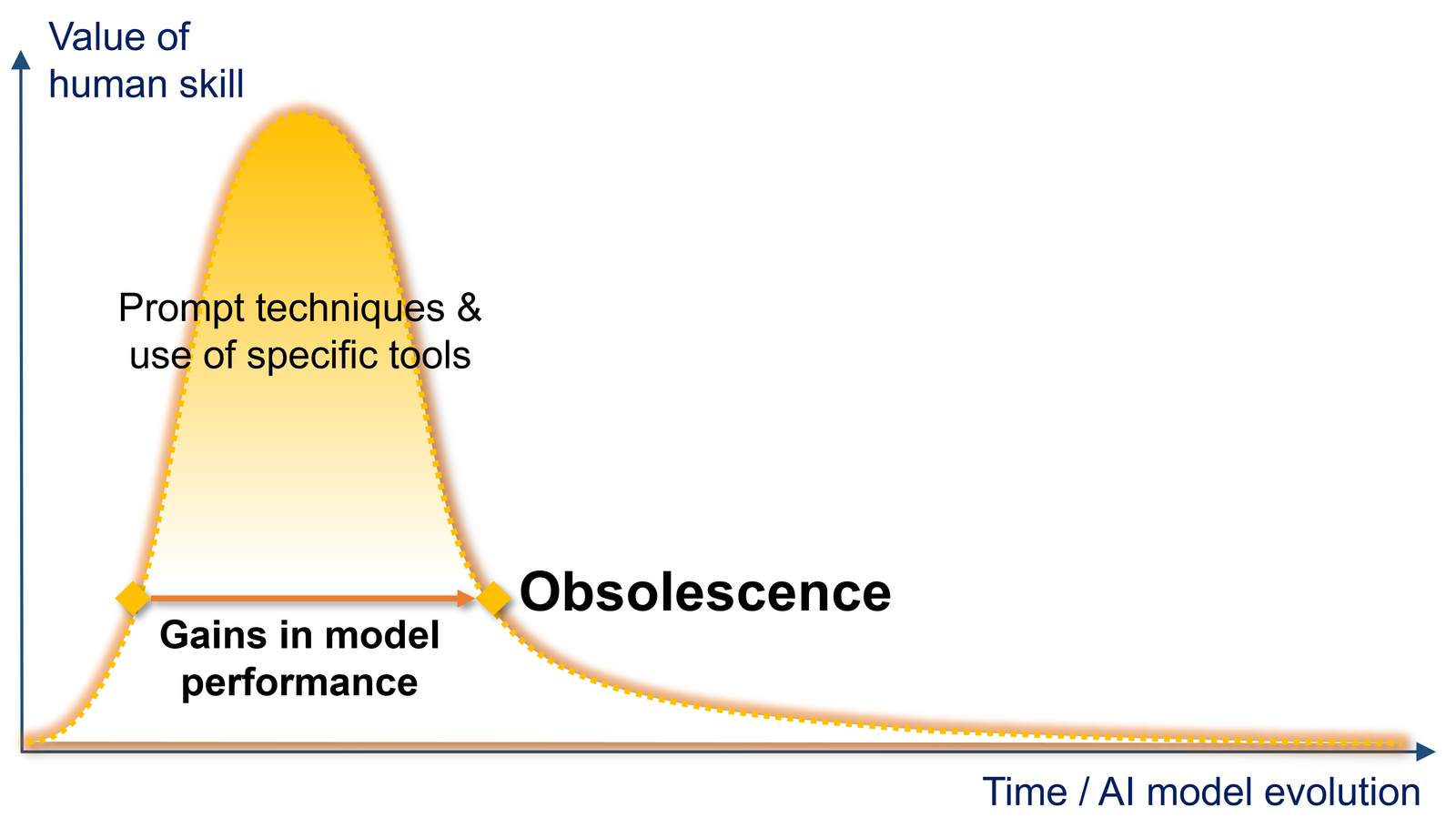
Figure 2. The AI divide, where learning becomes obsolete
3. Surface skills and core skills
The argument so far carries a certain unease. Fail to learn and you are left behind — yet the details you learn become obsolete. How should we confront this contradiction?
As one way of organising it, I propose a perspective that splits capability development into two kinds. A helpful image is a rock. The surface, worn away by wind and rain, and the core that remains within. Capability development in the age of AI has a similar structure (Figure 3).
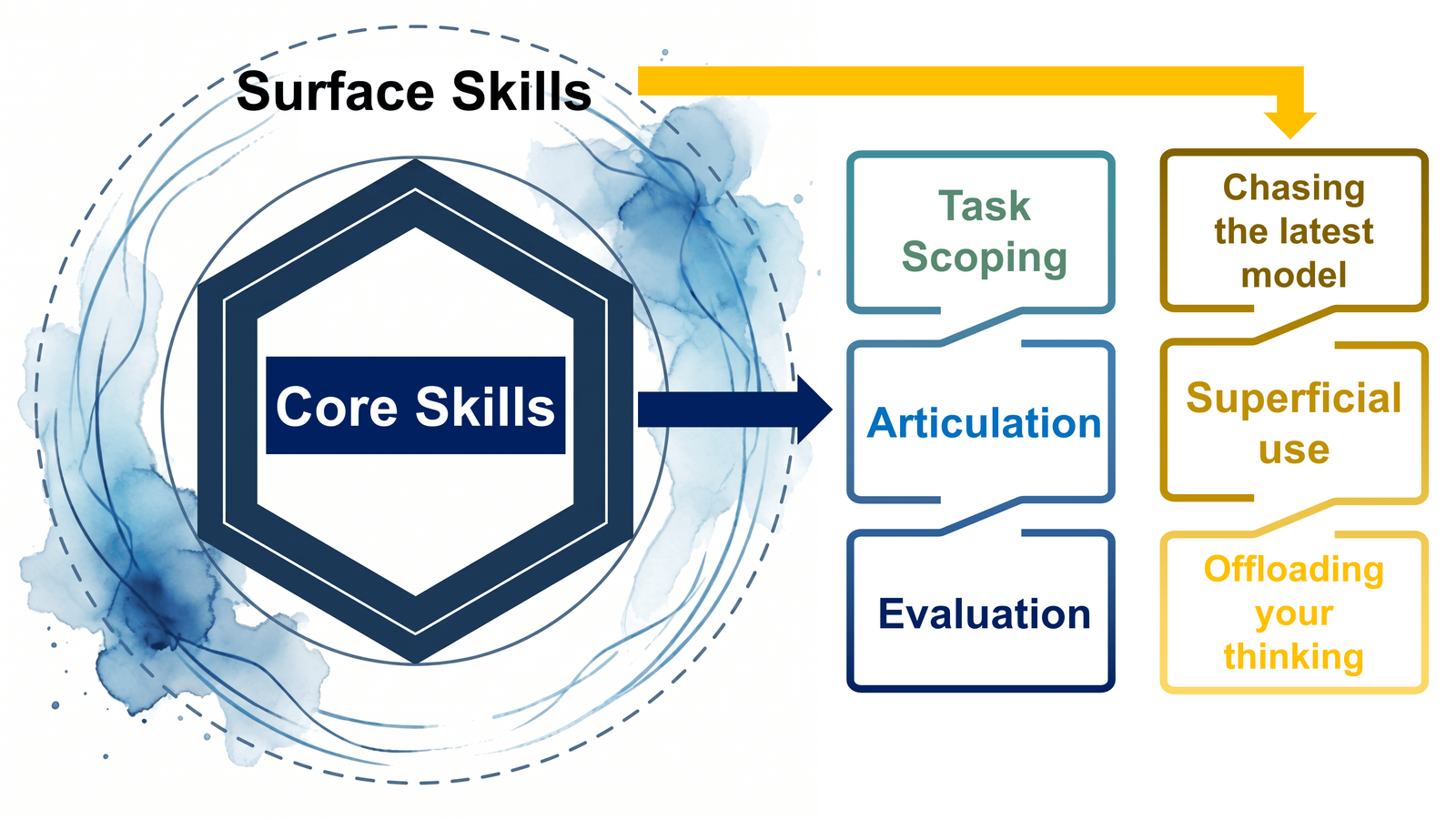
Figure 3. The structure of surface skills and core skills
The surface that wears away, the core that remains
Surface skills are the details, tied to operating a particular model or tool, that can become obsolete within six months to a year. The YouTube videos with titles like "50 god-tier prompts: 2026 edition" or "Already outdated — the next strongest AI model" deal with this layer. In every case, a substitute soon appears and the optimal answer is swapped out. Far more important than perfection is the flexibility to chase them down quickly when needed, on the assumption that they will become obsolete.
Core skills, by contrast, are the ability to put AI to work — an ability whose value does not erode. So what does "putting AI to work" mean? Broken down, it can be organised into three skill elements. Let us look concretely, using inventory optimisation as an example.
The three core-skill elements of putting AI to work
Scoping the task
This is the ability to see, within the whole of the work, where to carve out a slice and hand it to AI for the greatest value. In inventory optimisation, there is a world of difference between "having AI produce the demand-forecast figures and using the result as is" and "having AI surface the factors that drive demand variation, and then having people make the call at a supply-and-demand review on the basis of that output". The way you scope it changes the outcome entirely. Naturally, the latter yields a higher final result, because it brings the full business context into the supply-and-demand judgement.
Articulating premises and constraints
This is the ability to put into words the objective, premises, constraints and expected content, and to instruct AI accordingly. Rather than a sloppy request to "optimise the inventory", the person who can articulate "drawing on three years of shipment data, this period's promotion plan and lead times by supplier, and treating a stock-out rate within 5% as a constraint, calculate the recommended order quantity by SKU; present the output as a table" will get results whatever model they use.
Evaluating and refining the output
This is the ability to evaluate AI's output critically, using business knowledge. When AI proposes that "year-end demand is expected at 120% of the previous year", can you push back with "no — last year was boosted by special factors"? Whether you can hold that sense of unease is decisive in front-line decision-making.
What these three elements have in common is that what should be honed is not "the operation of, or knowledge about, a particular model (surface skills)" but "a deep understanding of the business and the work (core skills)". Setting the two against each other, they can be organised as follows.
Figure 4. Surface skills versus core skills
| Core-skill element | Surface skill (a decaying detail to chase) | Core skill (the true source of the performance gap) |
|---|---|---|
| Scoping the task | Chasing the latest model rankings | Training your eye to see where in the work to carve out the task |
| Articulating premises and constraints | Memorising "killer prompt" collections | Acquiring the ability to convert tacit knowledge into instructions |
| Evaluating and refining the output | Judging by a particular model's accuracy benchmarks | Knowing your demand patterns and supply constraints intimately, and sensing when an output feels wrong |
The universal advantage of core skills
Drawn along a timeline, the trajectories of the two skills are contrasting. Surface skills give off a high value for a moment, but become obsolete each time an AI model is updated. Core skills take time to acquire, but accumulate steadily and, over the long run, far surpass surface skills. What catches the eye in the short term is surface skills; what wins without fail over the long term is core skills (Figure 5).
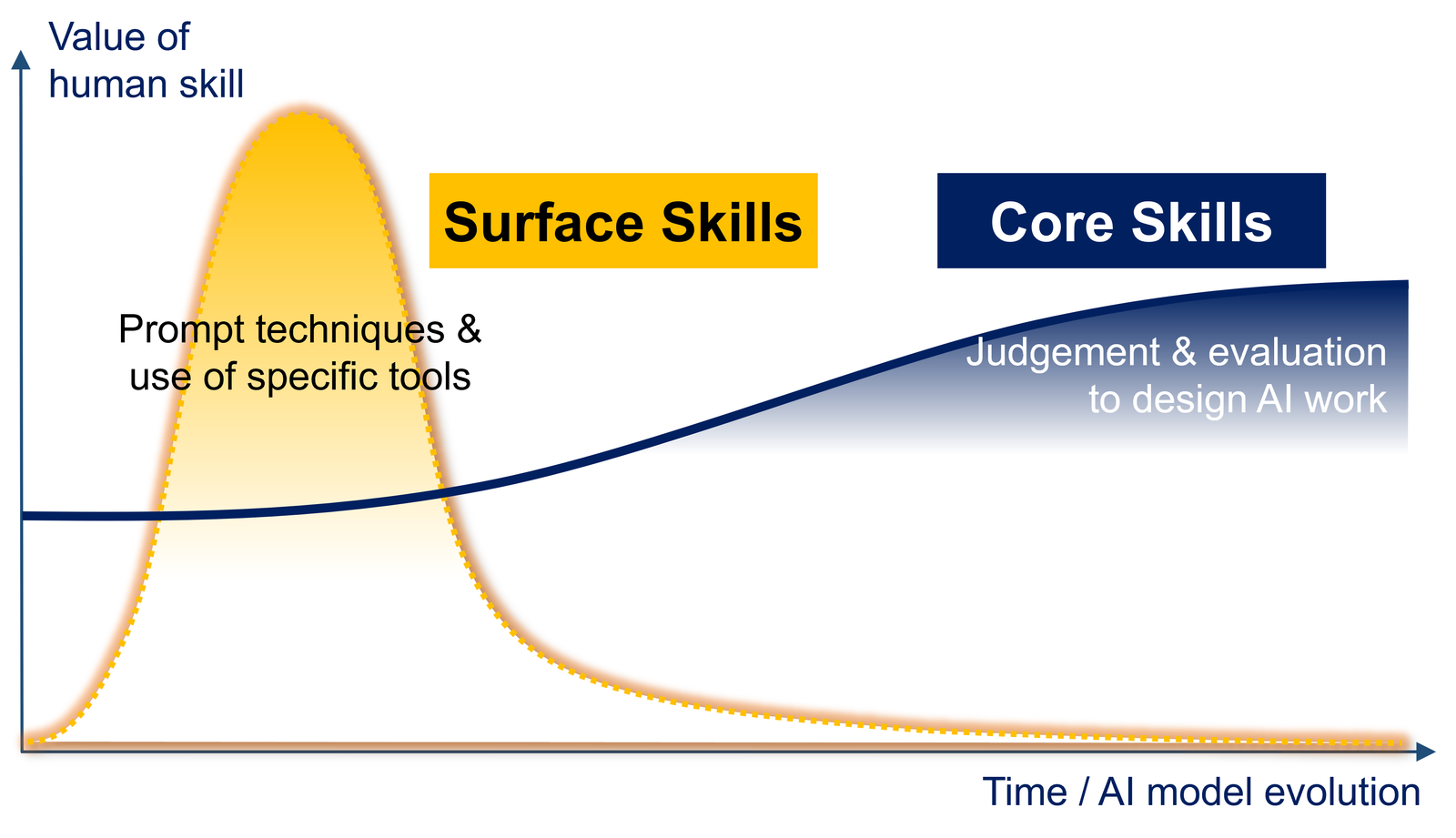
Figure 5. Time decides the contest between the two skills
What happens when core skills wither? You cannot evaluate AI's output critically, and you end up making the wrong decisions. Because the task is scoped crudely, it does not translate into results, and you jump to the short-sighted conclusion that "it was useless". The organisation, for its part, feels it has "done something" through a superficial roll-out, while it is left behind by others in precisely the domains of design and judgement where the real difference is made. You think you are driving AI, but you fall into a state of being driven by it.
4. Staying in the Race
To avoid the worst outcome, what should we do? Let us frame it as a strategy for staying in the race as AI models evolve, and think it through on both the individual and the organisational sides.
At the individual level, the task is to keep updating the depth of your own field of expertise. The shallower your expertise, the less you can verify AI's output, and the higher the risk of adopting a mistaken output as it stands. A useful reference is the image of "T-shaped talent". The vertical bar represents deep expertise; the horizontal bar, a broad understanding of adjacent fields. What matters is to hold the sense in which you have AI accompany you as you dig deep into your own expertise, while using AI to widen adjacent fields efficiently.
At the organisational level, rather than lining up orderly institutional designs such as cross-cutting training schemes and the carving out of time, I have a bolder prescription in mind: to elevate to stardom the handful of "shadow AI users" lurking within the company. In any organisation, there are always a few employees who, outside working hours, use AI to the hilt and have already redesigned their own work. Find them, recognise them officially, and stand up a new, small body — whether a dedicated AI team or a small team reporting directly to the president.
Japanese organisations, culturally high in uncertainty avoidance, are hard to move by top-down institutional design alone. By contrast, in a form where the organisation endorses, after the fact, individuals who are already moving, there is a risk-taking fait accompli in place first — and that becomes the trigger for the organisation to start moving.
At my own seminars, too, when I ask about "the challenges of getting started with AI", the answer that comes up first is "we have no specialist talent". In small and medium-sized enterprises especially, recruiting specialist talent well versed in AI is difficult. According to the Ministry of Internal Affairs and Communications' Communications Usage Trend Survey, the AI adoption rate among SMEs stands at only about 5%. That is precisely why lifting up the "hidden front-runners" already inside becomes the fastest-acting option. Whether an organisation stays at the bottom of the AI divide or catches up depends, in considerable part, on how it treats this handful of front-runners.
Information in this article is current as of the end of May 2026.
Questions we often receive from practitioners
How does the AI divide differ from the digital divide?
The digital divide was a gap in access to information, whereas the AI divide is a gap in the skill to use AI. Generative AI reached 53% usage worldwide within three years of its launch, so almost anyone can now use it. Even so, the results of knowledge work such as summarising, analysis, writing and decision support are diverging sharply. The decisive difference is that the question is no longer who has AI, but who can put it to work.
Is there any point in learning how to write prompts?
There is, but the benefit does not last long. Surface skills such as prompt techniques and handling the quirks of a particular model become obsolete within six months to a year as AI improves. What creates a lasting performance gap are three core skills: scoping the task, articulating premises and constraints, and evaluating and improving the output. In inventory optimisation, this means spelling out constraints such as the acceptable stockout rate, and being able to push back when an AI demand forecast ignores a one-off factor in last year’s figures.
Where should a mid-sized or small company without AI talent start?
AI talent is scarce in the market, so developing people in-house is the realistic route. Looking for the shadow AI users already inside the company can help secure people with a certain level of skill. The point to watch is to appoint them officially. Formally endorsing individuals who are already taking action can be the trigger that sets the whole organisation in motion.
Related Seminar
The Generative AI Frontline — For Leaders Who Drive Change
Get over the AI divide and put your organisation's strategy for staying in the race into practice. A course that makes core skills and the use of your "hidden front-runners" concrete, from a leader's perspective.
View seminar details →References and Key Sources
(12)
- U.S. National Telecommunications and Information Administration (NTIA). (1995, July). Falling Through the Net: A Survey of the "Have Nots" in Rural and Urban America. ntia.gov.
- Carter, L., Liu, D., & Cantrell, C. (2020). Exploring the Intersection of the Digital Divide and Artificial Intelligence: A Hermeneutic Literature Review. AIS Transactions on Human-Computer Interaction, 12(4), 253-275. aisel.aisnet.org.
- OpenAI. (2022, November 30). Introducing ChatGPT. openai.com.
- Ministry of Internal Affairs and Communications (Japan). (2024). Communications Usage Trend Survey (Reiwa 6). soumu.go.jp.
- UNDP. (2025, December). Human Development Report: The Next Great Divergence. hdr.undp.org.
- The White House Council of Economic Advisers. (2026, January). Artificial Intelligence and the Great Divergence. whitehouse.gov.
- Microsoft. (2026, February). AI Impact Summit ― USD 50 Billion Investment Commitment for Emerging Markets. microsoft.com.
- Anthropic. (2026, March). Economic Index: Learning Curves. anthropic.com.
- Axios. (2026, March). America's next class war will be over AI fluency. axios.com.
- Brynjolfsson, E., Li, D., & Raymond, L. R. (2023). Generative AI at Work. NBER Working Paper No. 31161. nber.org.
- Lee, H.-P., Sarkar, A., Tankelevitch, L., et al. (2025). The Impact of Generative AI on Critical Thinking: Self-Reported Reductions in Cognitive Effort and Confidence Effects from a Survey of Knowledge Workers. Microsoft Research / Carnegie Mellon University. microsoft.com.
- Hofstede, G. (2001). Culture's Consequences: Comparing Values, Behaviors, Institutions and Organizations Across Nations (2nd ed.). Sage Publications.